What spread in trading is
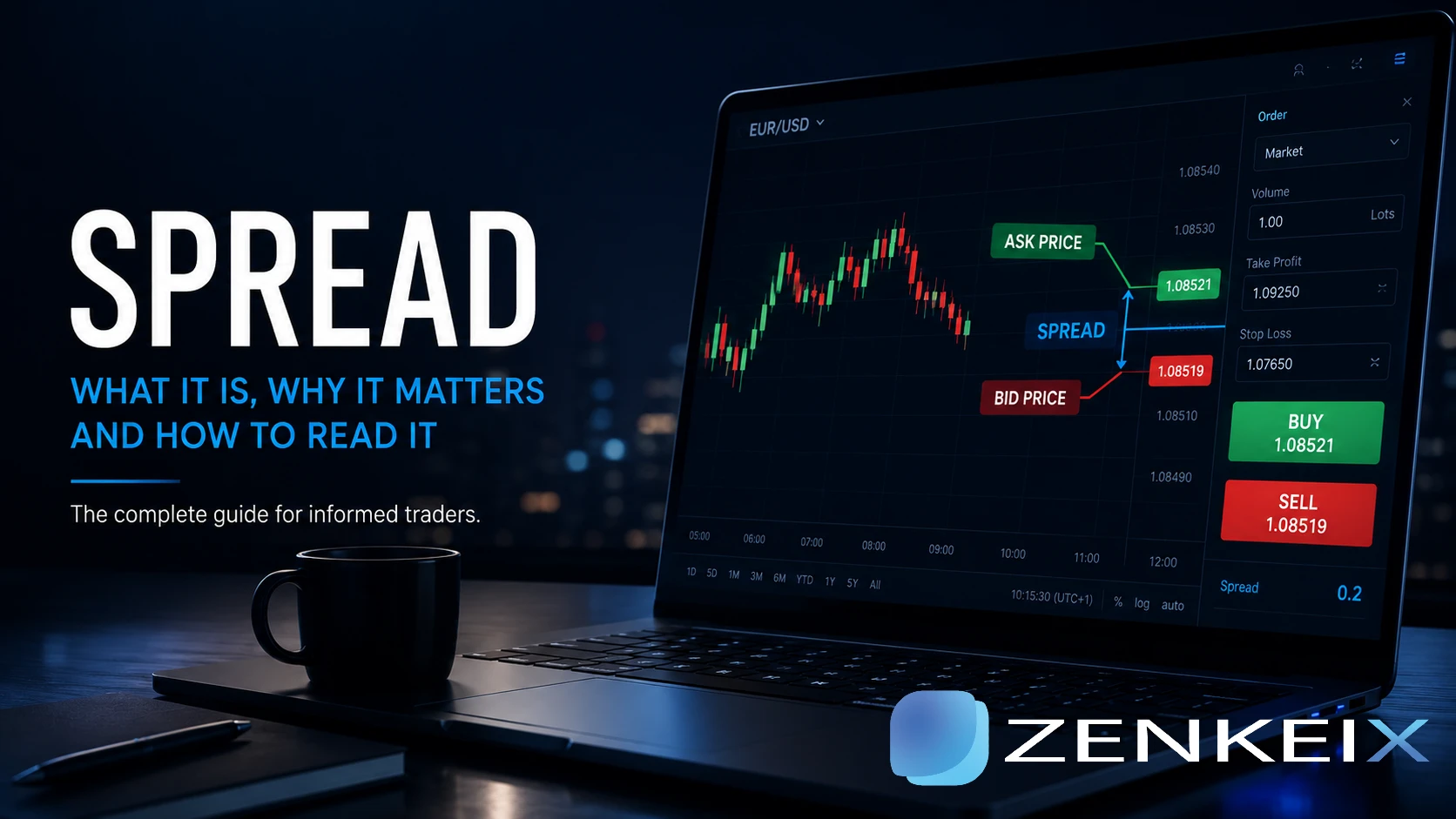
Spread in trading is the distance between the Bid price and the Ask price. In practice, it is the implicit cost you pay to open a market position. It is not a separate commission, but it still affects the final result.
If you buy, you enter at Ask. If you sell, you exit at Bid. The distance between the two is the first obstacle the trade must overcome before it can become profitable.
Fixed spread and variable spread
Not all spreads behave the same way. Some brokers offer more stable spreads, while others widen the spread when volatility rises or liquidity drops.
- Fixed spread: more predictable and useful when you want simple calculations and operational consistency.
- Variable spread: can be competitive in normal conditions but deteriorates quickly when the market accelerates.
- Dynamic spread: often reflects real liquidity quality, but requires more careful testing.
The right choice does not depend only on the nominal price. It depends on the strategy, the timeframe, the number of trades, and the way the system reacts to entry costs.
Why spread matters in backtests
A backtest with an unrealistically low spread tells a prettier story than the real market. If the cost input is too optimistic, the equity curve looks cleaner and expectancy appears stronger than it will be live.
The problem grows when the system works with tight targets, scalping, close stop losses, or a high frequency of trades. In those cases, just a few points of spread change the risk-reward balance.
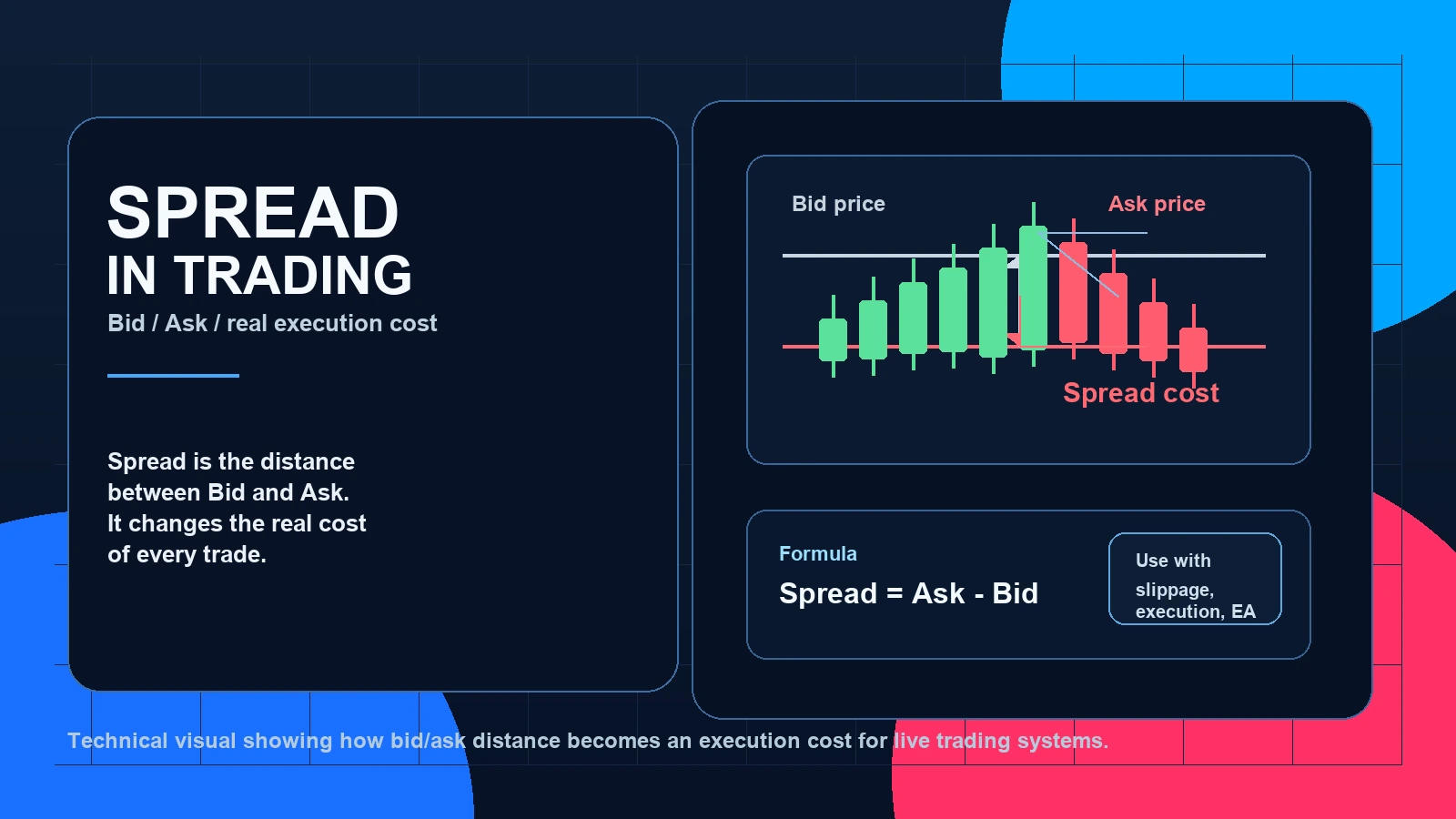
Spread should be read together with slippage in trading, maximum drawdown, and Profit Factor vs Recovery Factor. On its own, it says little. Inside the system, it says much more.
Spread and Expert Advisors
In Expert Advisors, spread is not a minor detail. An algorithm can be logically correct and still lose edge if it enters when the cost of entry is too high.
When you review an EA, check at least three things: average spread, maximum tolerated spread, and real spread during stressful periods. If the system works only in ideal conditions, it is not robust. It is simply under-tested.
This is also where Monte Carlo simulation, K-Ratio, and Recovery Factor become useful. Real robustness includes the cost of entry.
How to reduce spread impact
You cannot control the market, but you can design the system so it tolerates spread better and does not depend on favorable conditions only on paper.
- filter abnormal spread before opening automated trades;
- avoid high-stress sessions if the strategy was not built for that context;
- choose brokers and instruments that fit your timeframe;
- judge the relationship between entry cost and average target more carefully;
- test the system with realistic spread, not ideal conditions;
- compare demo, live, and verified reports to understand the real impact.
Want to know whether your system can really handle live-market spread?
We can analyze backtests, execution, broker conditions, slippage, and robustness metrics to understand whether the system still makes sense outside the lab.
FAQ
What is spread in trading?
It is the difference between Bid and Ask, meaning the implicit cost you pay to enter the market.
Fixed spread or variable spread?
Fixed spread is more predictable, while variable spread can be more competitive but changes with volatility and liquidity.
Why does spread change backtests?
Because if the cost is too optimistic, the backtest overstates strategy quality and the equity curve looks cleaner than reality.
Should spread be considered for Expert Advisors?
Yes. In automated systems it is a key operational variable, especially when the strategy uses tight targets or high frequency.